MS tiredness, mapped, energy tracking that predicts your day.
MS tiredness and exhaustion don't behave like ordinary fatigue. A 60-second morning check-in becomes a one-sentence forecast for the day ahead, built around how multiple sclerosis fatigue actually behaves, not generic tiredness.
The three pieces of a useful MS energy log
Morning signal
Three quick questions in under a minute. Sleep, perceived energy, cognition. That's the floor of every prediction.
Wearable layer (optional)
HRV, resting heart rate, sleep architecture, skin temperature. Connect Oura, Apple Watch, Fitbit, or Garmin to shorten the learning curve.
Evening reflection
One sentence at night closes the loop, did the day match the forecast? That's how Myelina learns your personal pattern.
Review three pieces of context. Nothing is predicted.
These selections stay in browser memory for this page session. They are not submitted, stored, scored, used for outreach, or turned into a recommendation. The exercise shows only how self-reported context can be organized for retrospective review.
Why a generic fatigue tracker doesn't cut it for MS
Ordinary fatigue is linear: less sleep, more tired. MS fatigue isn't. Heat, hormonal cycle, infection, cognitive load, and yesterday's activity all bend the curve in ways a 1–10 slider can't capture. A proper MS energy tracker has to be MS-shaped from the first question.
Myelina Health is built on PROMIS Fatigue-MS 8a, the validated instrument your neurologist already trusts. Every entry contributes to a longitudinal record you can hand over at a visit, without becoming a homework assignment.
What's inside every morning
- Daily check-in and energy logging
- Basic weekly trend summary
- Export your data any time
Frequently asked questions
- What is MS energy tracking?
- MS energy tracking is the practice of logging a small set of daily signals, sleep quality, perceived energy, stress, cognition, alongside optional wearable data, so that patterns emerge over time. The goal is not the log itself; it is using the log to anticipate energy windows instead of reacting to crashes.
- Is an MS diary the same thing?
- Traditionally an MS diary is freeform notes about symptoms, triggers, and treatments. Myelina Health replaces the blank page with three quick questions and a structured forecast, so the diary is something you actually keep for months instead of weeks.
- How is this different from a generic fatigue tracker?
- Generic fatigue trackers ask you to score tiredness 1–10 and show a line chart. Myelina Health is MS-specific: it uses PROMIS Fatigue-MS 8a, accounts for heat sensitivity and cognitive fog, and turns the data into a one-sentence forecast for tomorrow.
- Can I track energy without any wearable?
- Yes. The about-a-minute morning check-in is the core. A wearable (Oura, Apple Watch, Fitbit, Garmin) sharpens prediction by adding HRV and sleep architecture, but the tracker is fully usable without one.
- How long until the predictions become useful?
- Most users see a meaningful daily forecast after 2–3 weeks of consistent check-ins. The model improves continuously after that as it learns your personal baseline.
Related: MS fatigue tracker and living with MS.
Related articles
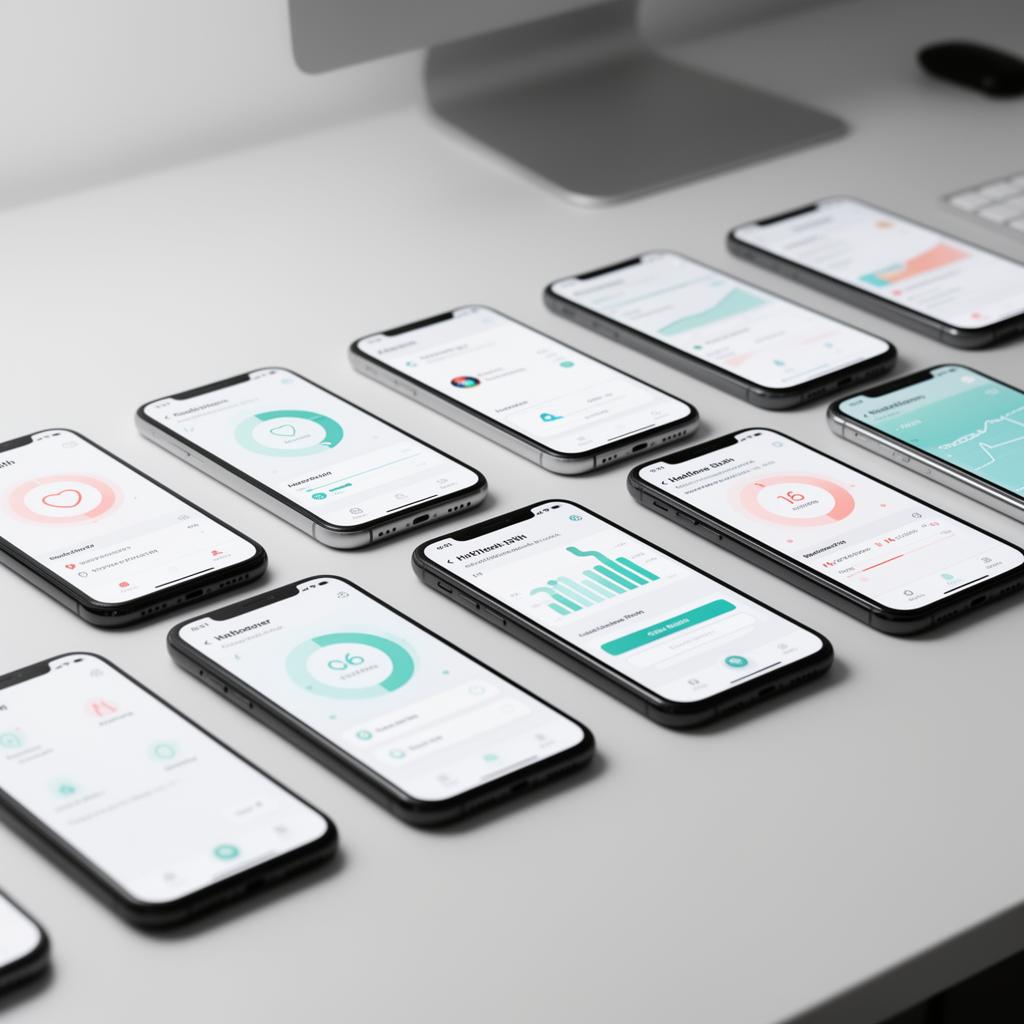
Best MS Symptom Tracker Apps for 2026 (Compared)
Not all tracking apps are created equal, especially for MS. Here's an honest look at what's available and what actually helps.
Read
MS Heat Intolerance: Why Temperature Wrecks Your Energy (and What to Do)
When 75°F feels like 100°F and a hot shower can steal your afternoon, that's Uhthoff's phenomenon. Here's the science and the solutions.
Read
Spoon Theory vs Energy Budgeting: A Better Framework for MS
Spoon theory gave us language. Energy budgeting gives us strategy. Here's why the evolution matters.
Read