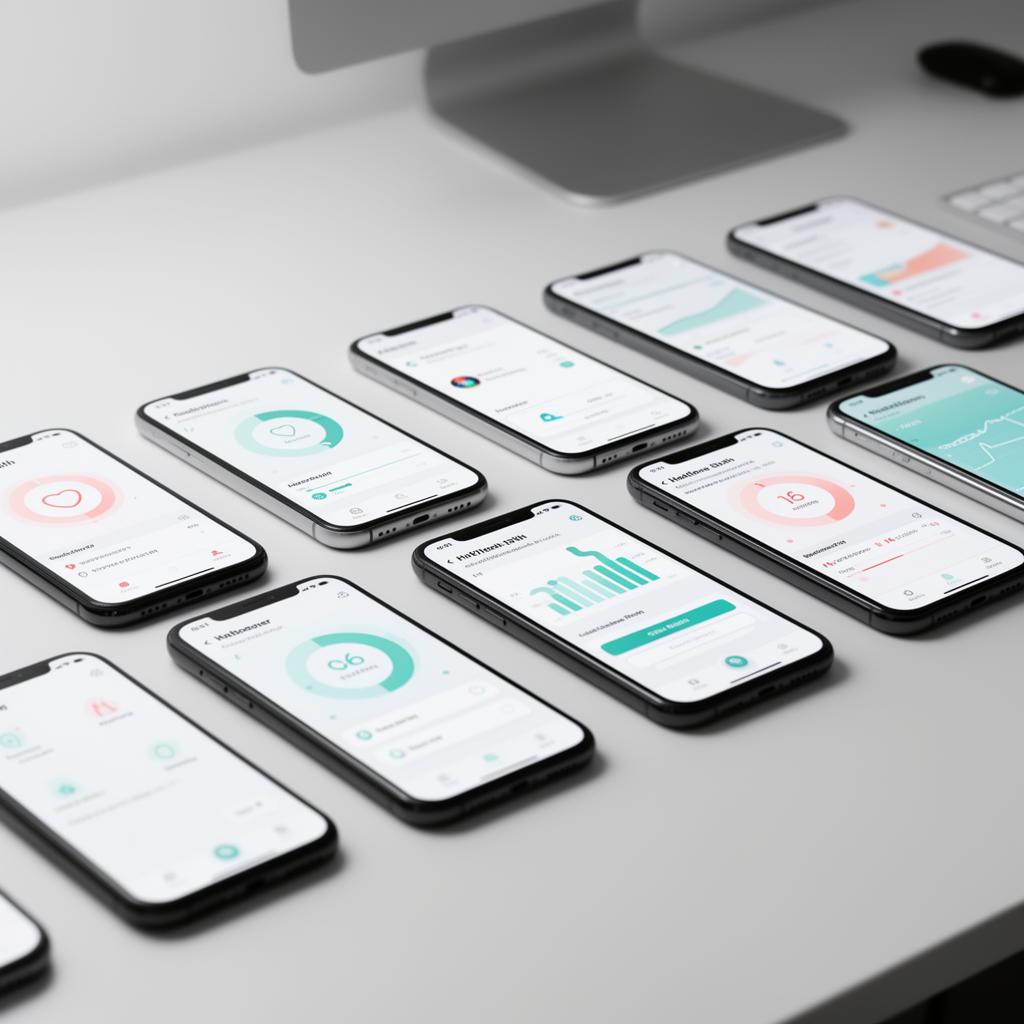
Why MS Needs Its Own Tracking Tools
General health apps track steps, heart rate, and calories. That's great for the general population, but it misses what matters most for MS: fatigue patterns, cognitive clarity, symptom fluctuation, and energy prediction.
The ideal MS tracking app should be:
- Fast. Under 60 seconds to complete a daily entry
- MS-specific. Tracking metrics that actually matter for MS management
- Pattern-revealing. Showing you trends you can't see day-to-day
- Actionable. Turning data into recommendations you can use today
Here's how the current options compare.
The Apps
Myelina Health
Best for: Women with MS who want energy prediction, not just tracking
- Daily check-in time: ~30 seconds
- Key features: Morning energy check-in, AI-powered energy prediction, visual Energy Map, evening reflection, pattern recognition over time
- What sets it apart: Goes beyond tracking to prediction, tells you how your day is likely to unfold based on your personal history
- Access: Invite only during our current cohort
- Platforms: Web (mobile-responsive)
Best feature: The Energy Map. Instead of just logging symptoms, you get a visual prediction of your energy across the day, so you can plan proactively.
Floodlight MS (Roche)
Best for: Clinical-grade objective measurements
- Daily check-in time: 5-10 minutes (includes active tests)
- Key features: Walking speed test, hand dexterity test, cognitive processing test, mood tracking
- What sets it apart: Objective, measurable assessments that can be shared with neurologists
- Pricing: Free
- Platforms: iOS, Android
Best feature: The hand dexterity test provides objective data that complements subjective symptom reports.
MS Healthline
Best for: Community + tracking in one place
- Daily check-in time: 2-5 minutes
- Key features: Symptom logging, medication reminders, community forums, articles
- What sets it apart: Combines tracking with a large MS community
- Pricing: Free
- Platforms: iOS, Android
Best feature: The community aspect, connecting with others who understand your experience.
Bearable
Best for: Detailed correlations across many health factors
- Daily check-in time: 3-10 minutes (highly customizable)
- Key features: Track virtually anything (symptoms, activities, food, weather, medications), correlation reports
- What sets it apart: The correlation engine, it identifies statistical relationships between factors
- Pricing: Free tier; Premium at $6.99/month
- Platforms: iOS, Android
Best feature: Correlation reports showing which factors most strongly predict your symptoms.
Symple
Best for: Simple, no-frills symptom tracking
- Daily check-in time: 1-2 minutes
- Key features: Customizable symptom list, severity ratings, notes, basic charts
- What sets it apart: Simplicity, no bloat, no social features, just clean tracking
- Pricing: $2.99 one-time
- Platforms: iOS
Best feature: The customizable symptom list, you track exactly what matters to you, nothing more.
Choosing the Right App
Ask Yourself:
How much time will I realistically spend tracking?
- Under 1 minute → Myelina Health or Symple
- 2-5 minutes → MS Healthline or Bearable
- 5-10 minutes → Floodlight MS
What do I want from my data?
- Energy prediction and planning → Myelina Health
- Objective clinical measurements → Floodlight MS
- Detailed correlations → Bearable
- Simple trend visualization → Symple
Do I want community features?
- Yes → MS Healthline
- No → Any of the others
What will I actually stick with? This is the most important question. The best tracking app is the one you'll use consistently. A 30-second check-in you do daily for 6 months will reveal more than a 10-minute assessment you abandon after 2 weeks.
The Case for MS-Specific Tools
Generic health apps (Apple Health, Google Fit, Fitbit) are useful for step counting and heart rate, but they miss the nuance of MS:
- They don't track cognitive clarity
- They can't predict energy based on MS-specific patterns
- They don't understand that 5,000 steps for someone with MS might represent a heroic day
- They don't factor in heat sensitivity, spasticity, or the boom-bust cycle
MS deserves tools designed for MS. Not adapted from general fitness, not repurposed from other conditions, built from the ground up for the unique challenges of living with Multiple Sclerosis.
Myelina Health was designed specifically for women with MS who want more than a diary, they want a tool that helps them plan their days around their energy, not their energy around their days.